


In the previous article on marginal tax rates, we examined their derivation and composition in detail – however, for the sake of clarity, using a simplified example: an unmarried, non-religious person residing in the city of Zurich. Knowing your personal marginal tax rate is of great importance for numerous financial decisions. It helps answer questions such as:
- Is it worthwhile for me to contribute to pillar 3a, and how high will the tax savings be in the current tax year?
- Is it worthwhile to increase my working percentage, and what share of the additional income will effectively be taxed?
The individual marginal tax rate varies depending on place of residence, marital status, number of children, and other influencing factors. For solid tax planning, it is particularly useful not only to look at isolated values, but to understand the development of marginal and average tax rates in relation to taxable income. Point estimates from individual tax calculators are often insufficient for this purpose.
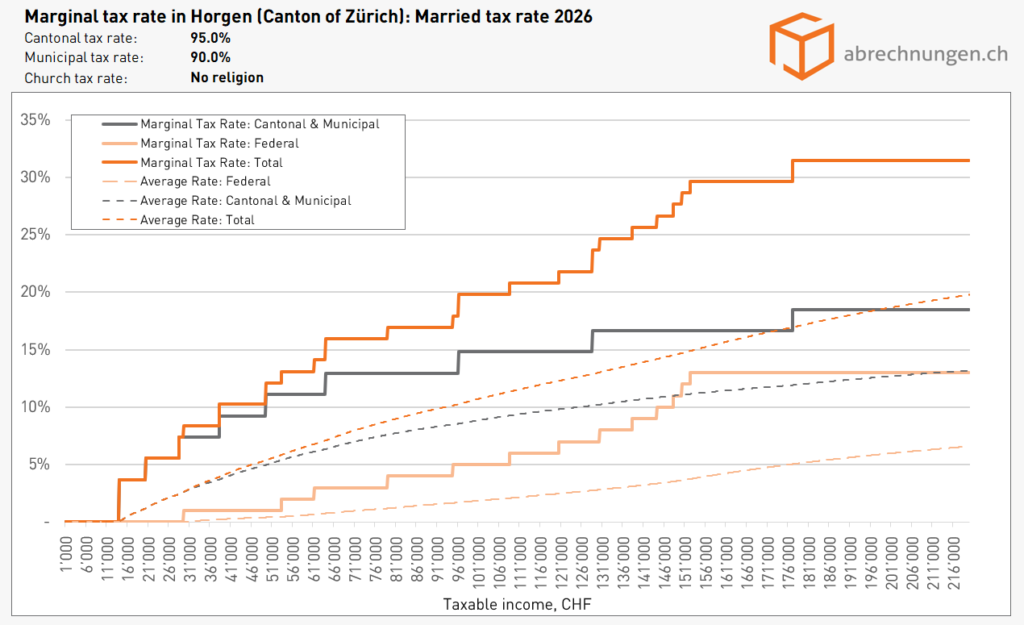
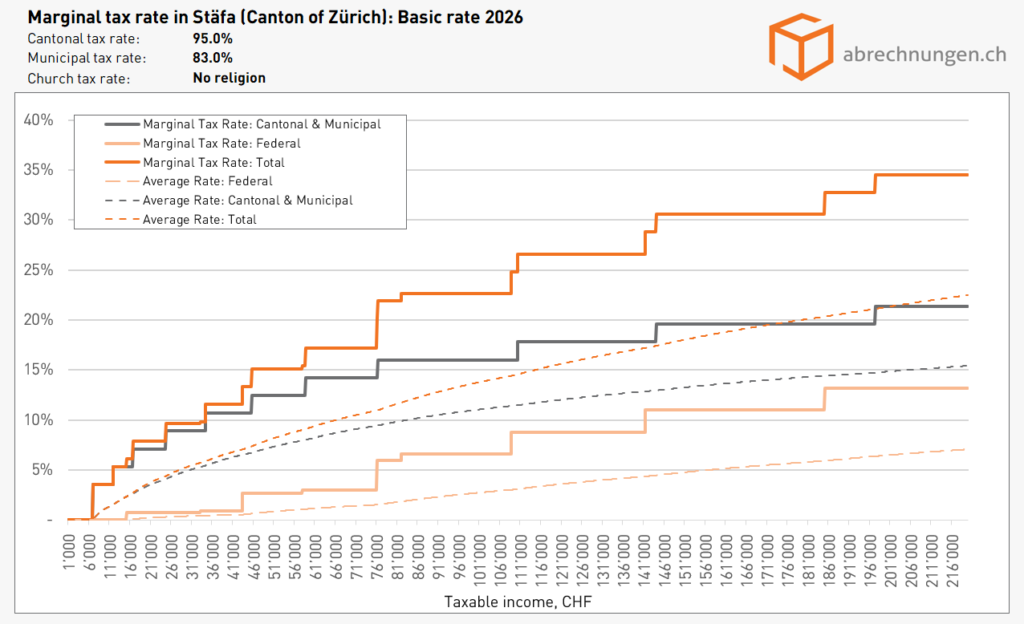
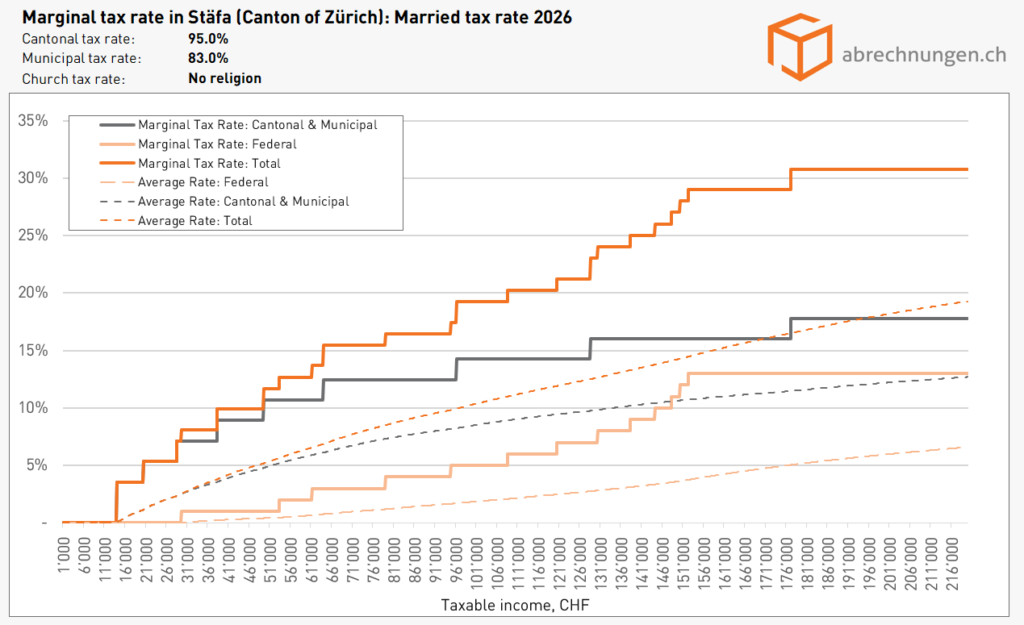
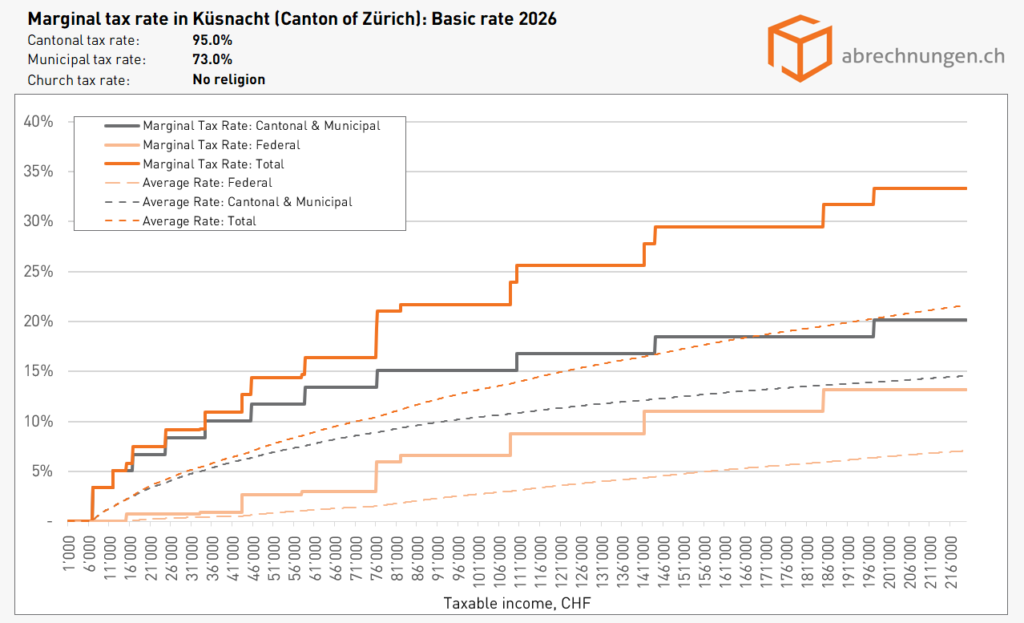
In the following, we present corresponding charts for ten selected municipalities in Zurich. We have included the largest municipalities as well as some particularly interesting examples in order to cover a broad range of relevant scenarios. Since many municipalities have identical tax multipliers, they also result in identical marginal tax rates, as these are based on the same cantonal tax base. For example, a person from Andelfingen (tax multiplier 119%) can use the chart for the city of Zurich (also 119%) as a reference.
There are significant differences between married and unmarried individuals, both in the level and structure of taxation. For this reason, the corresponding charts are shown separately.
The cantonal tax multiplier for 2026 in the Canton of Zurich is uniformly 95%. The municipal tax multipliers for 2026, however, vary significantly and range from 71% (Zumikon) to 128% (Bachs).
Marginal and average tax rates for selected municipalities in Zurich for 2026 (single and married, excluding church tax)
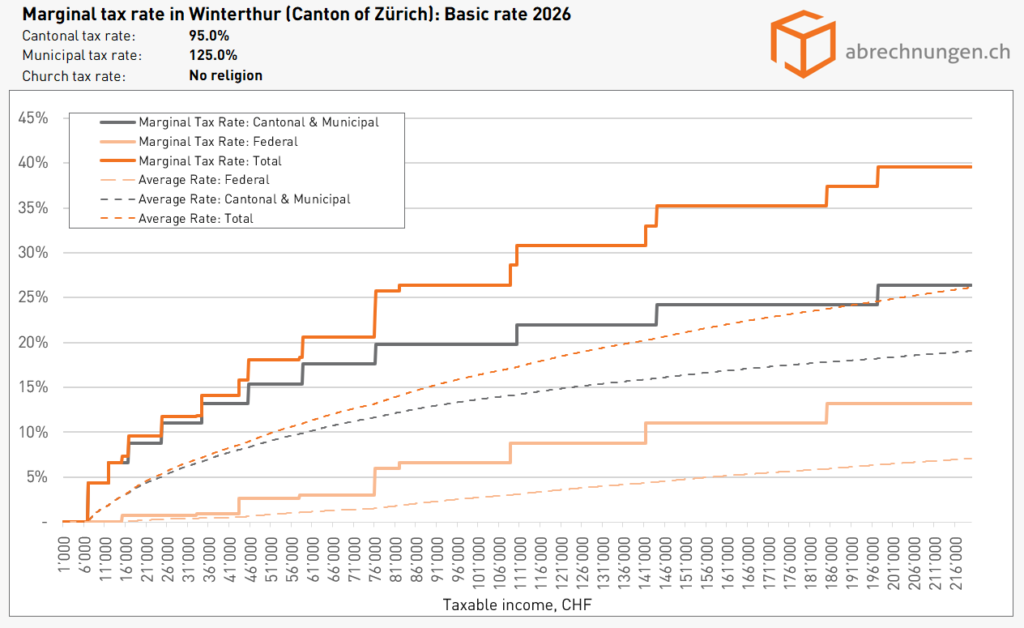
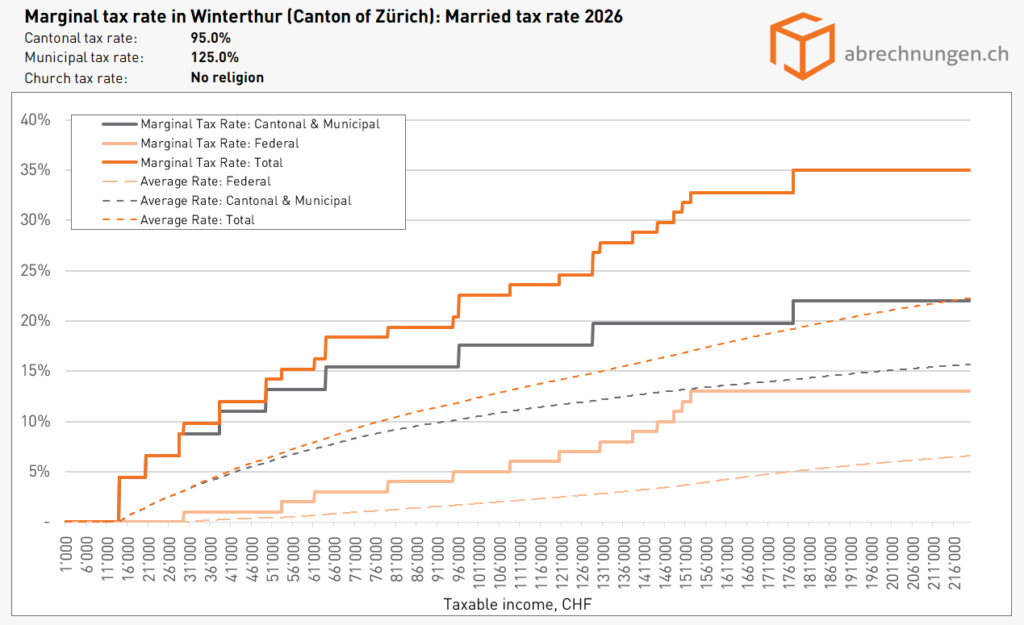
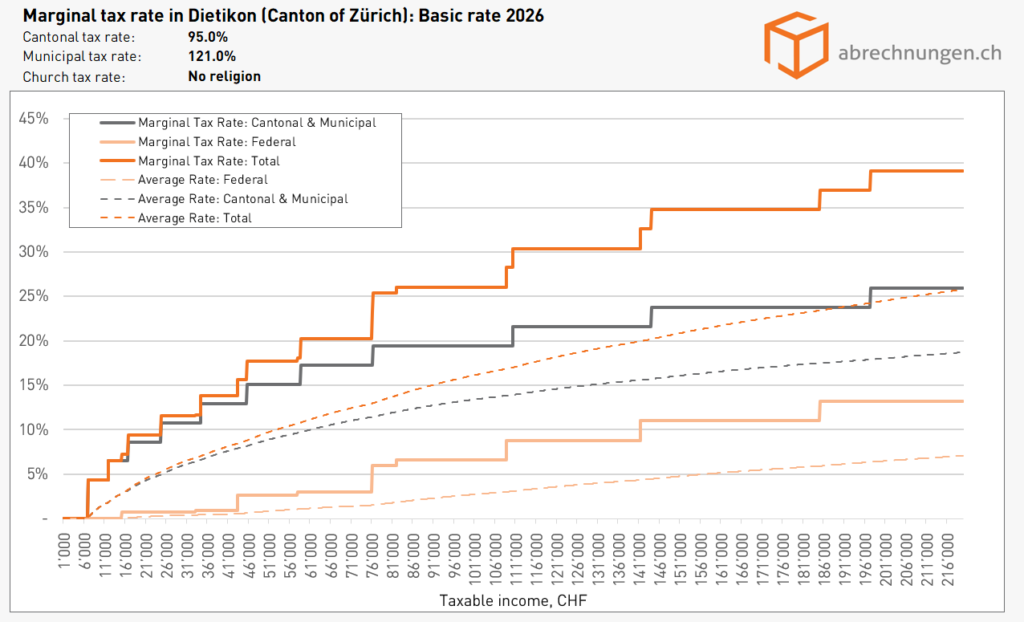
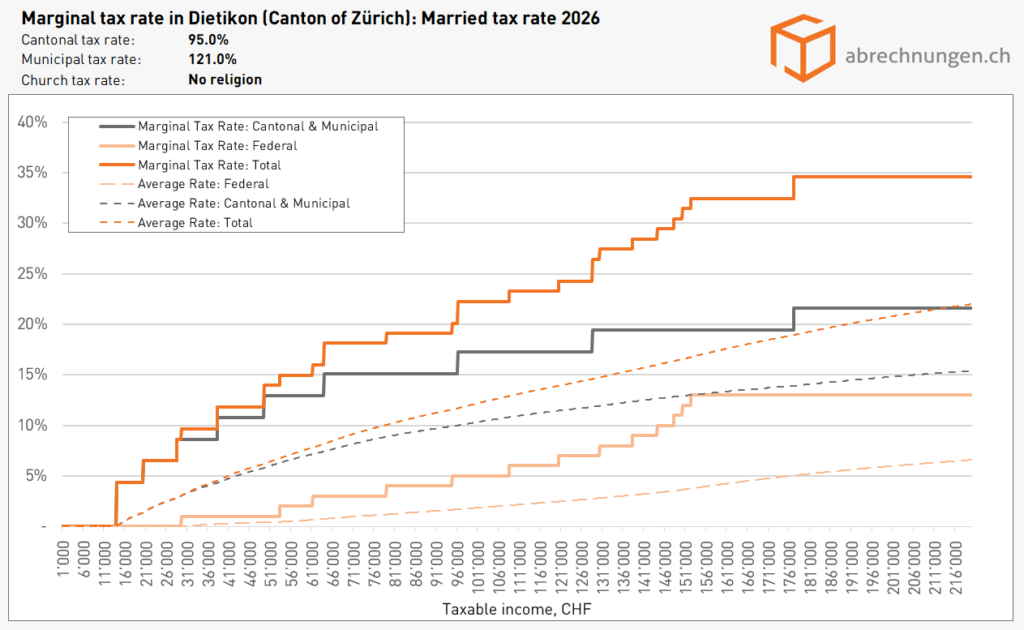
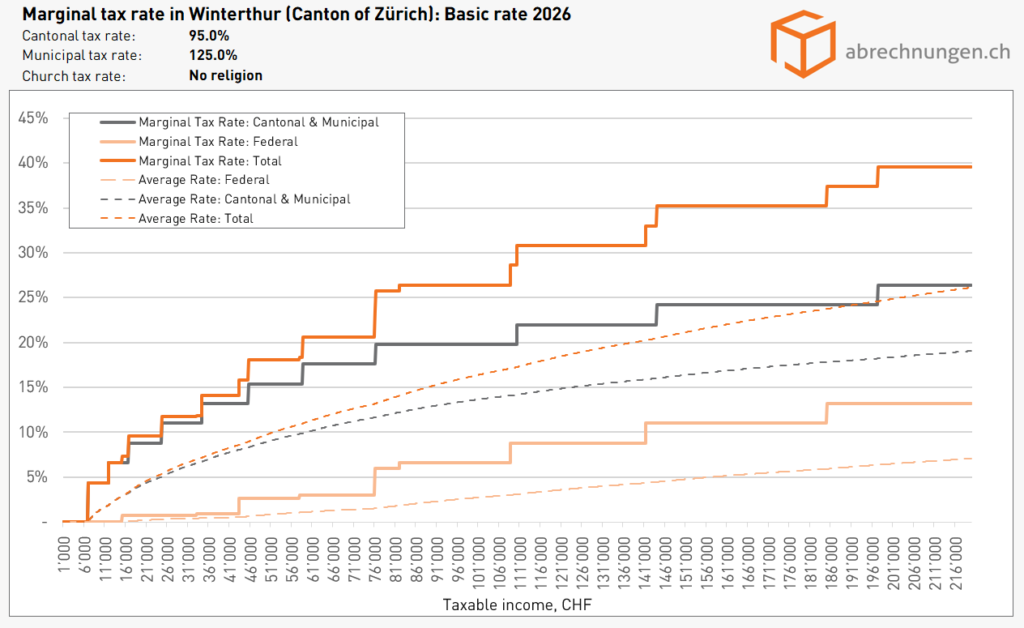
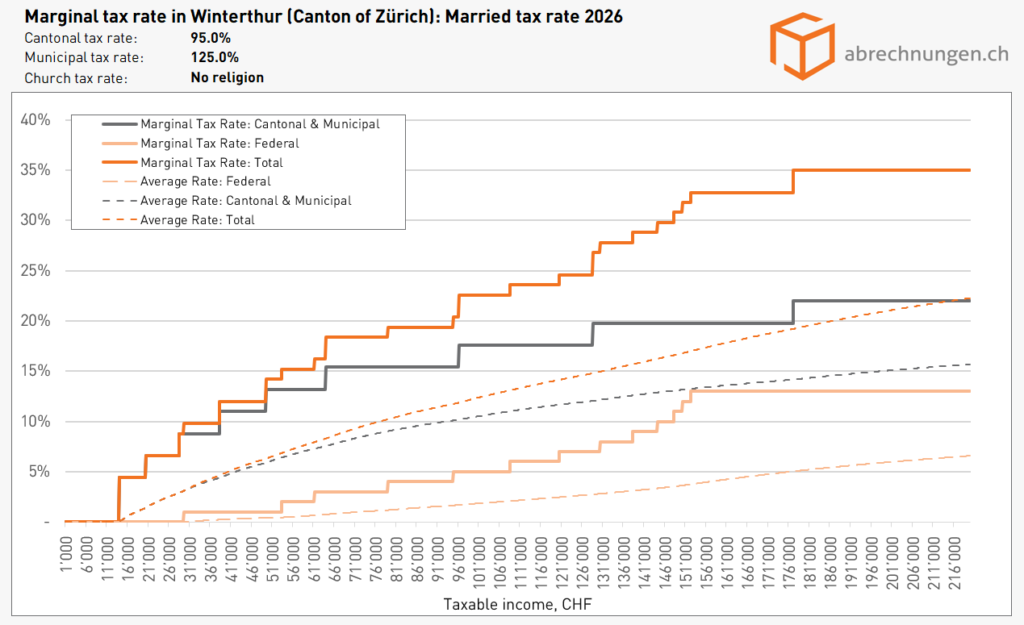
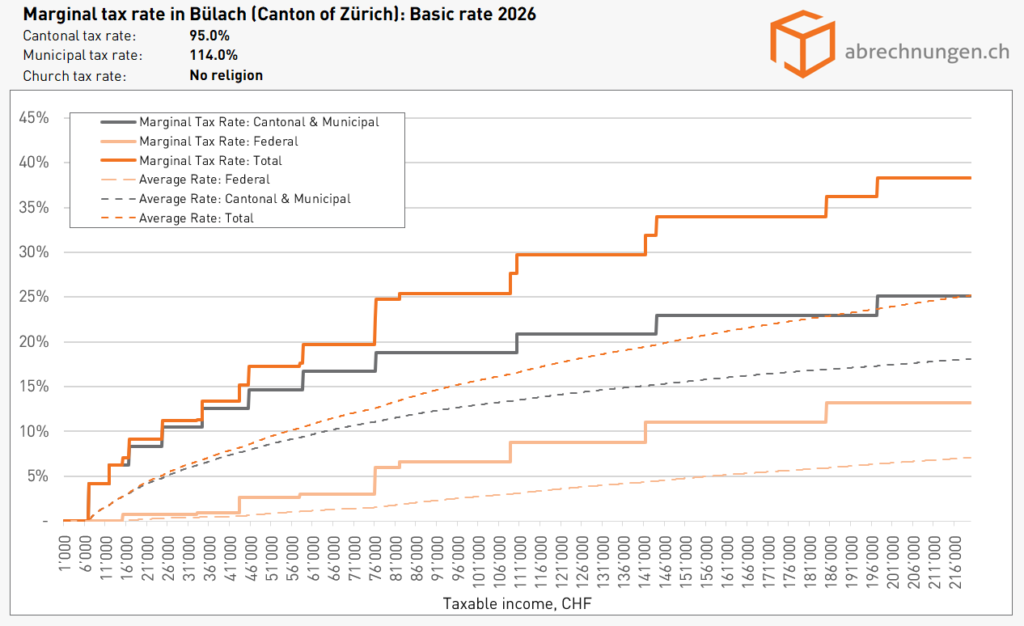
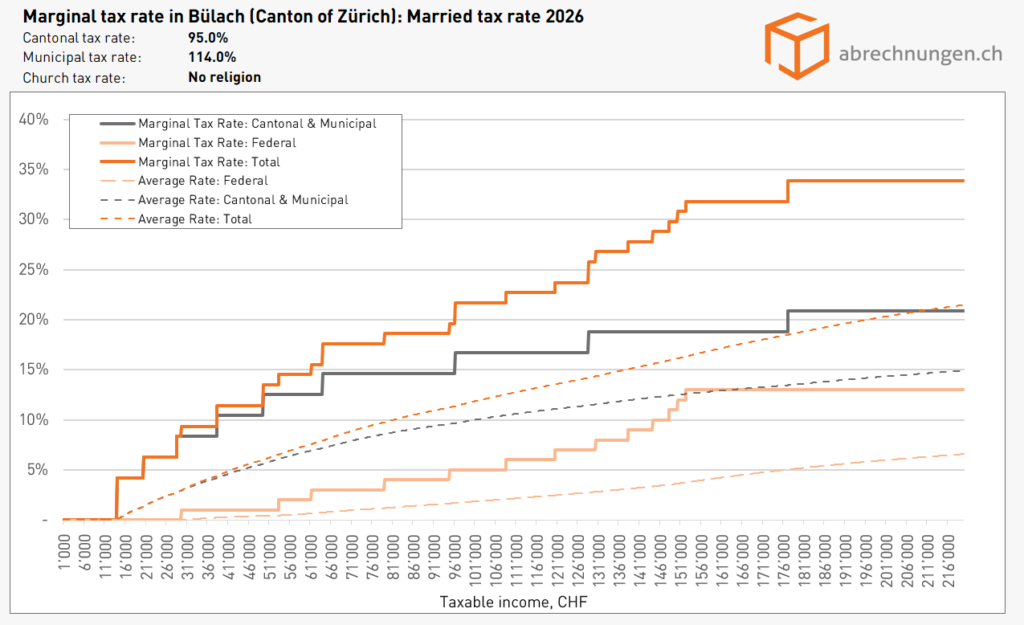
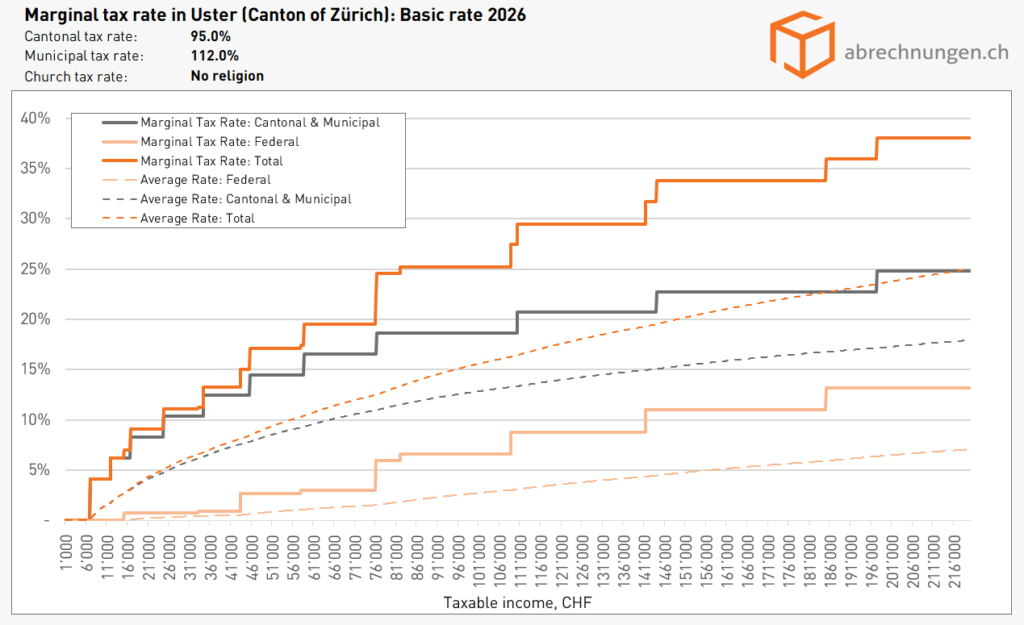
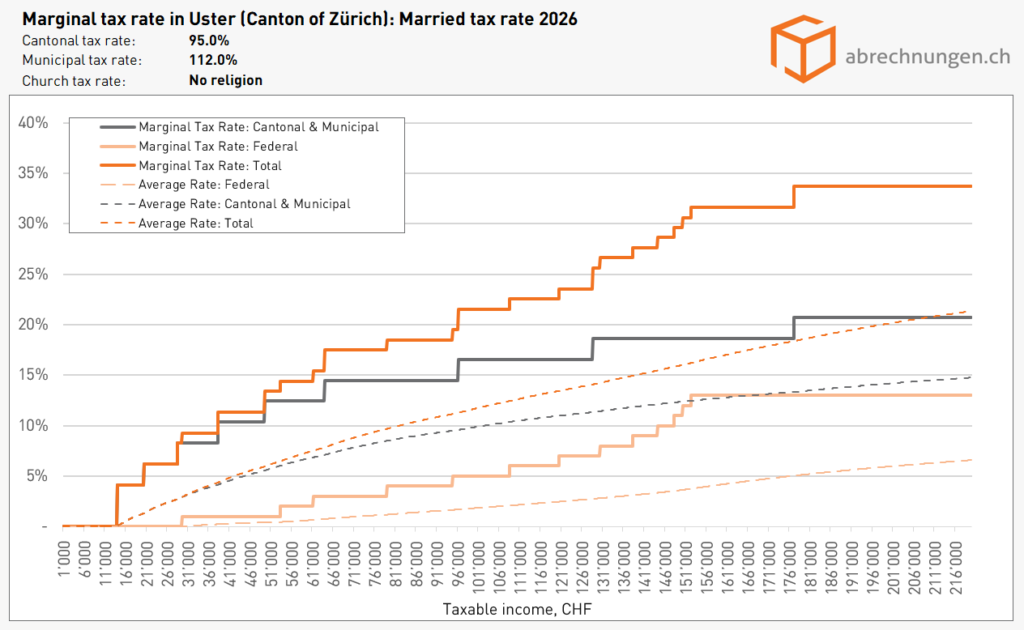
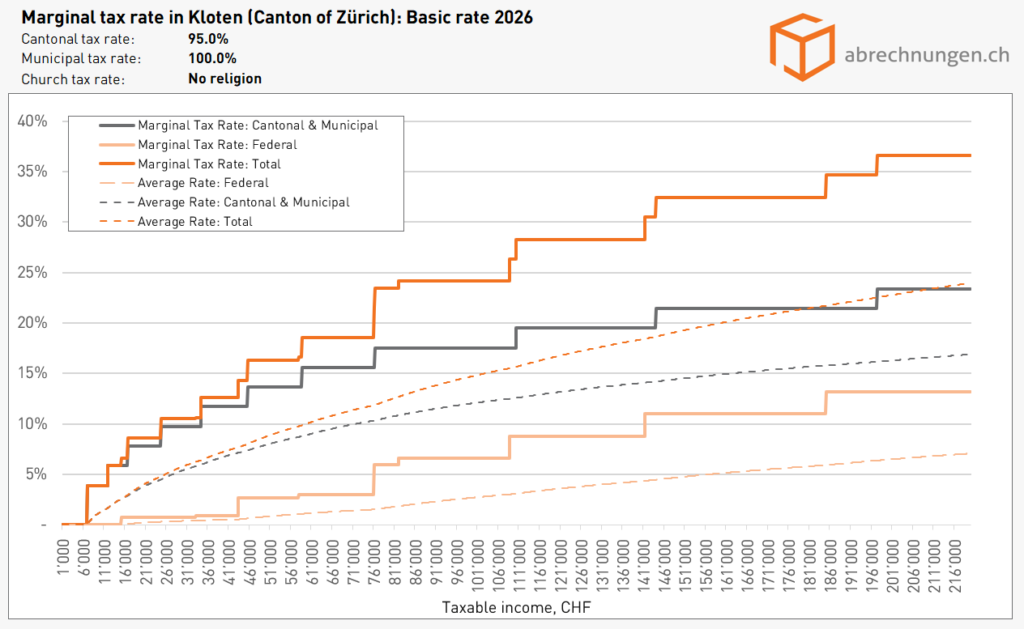
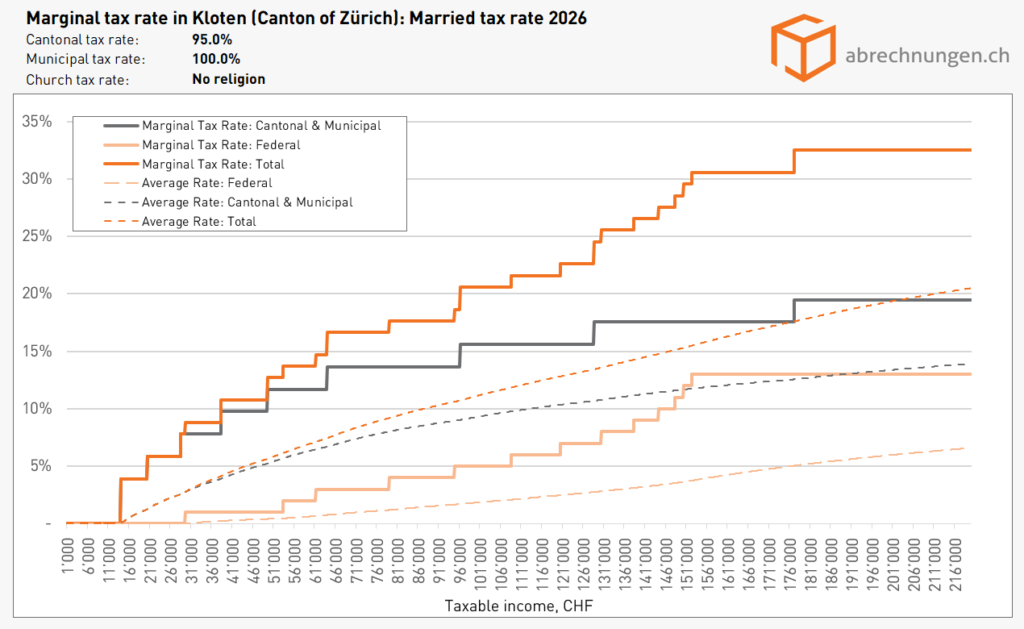
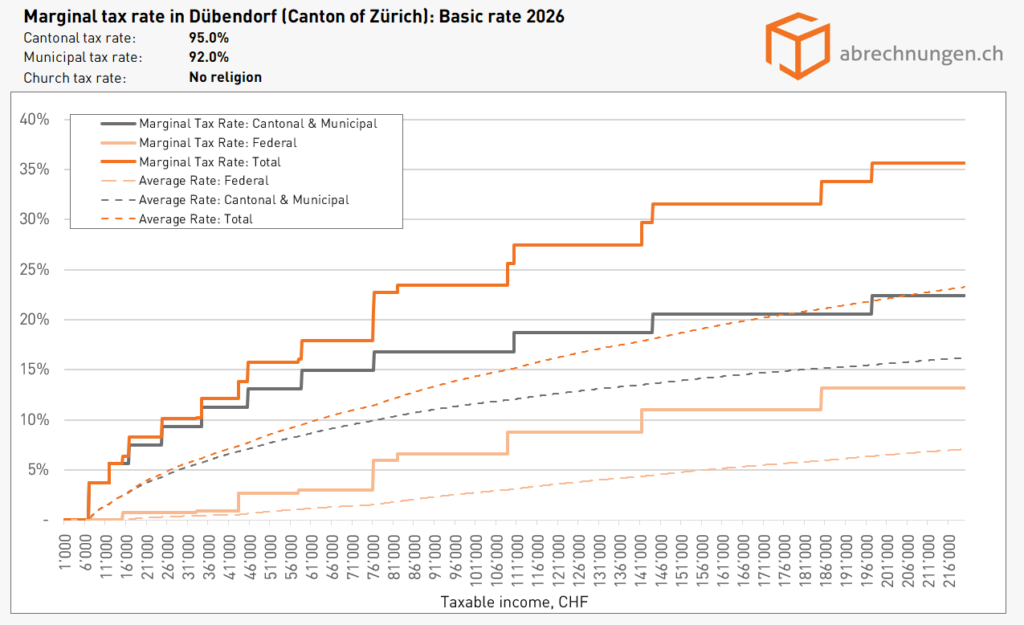
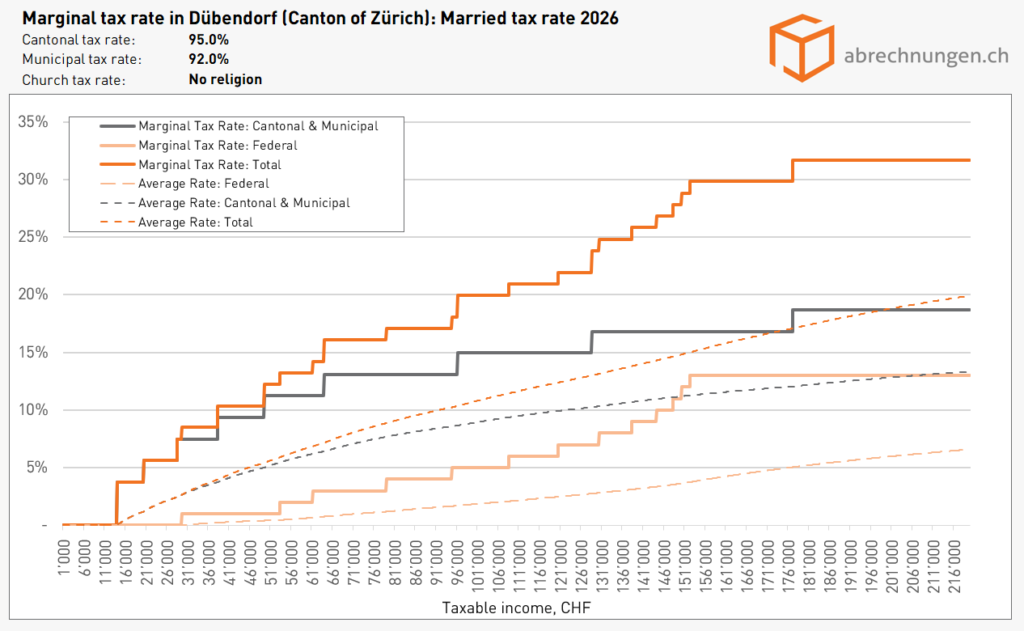
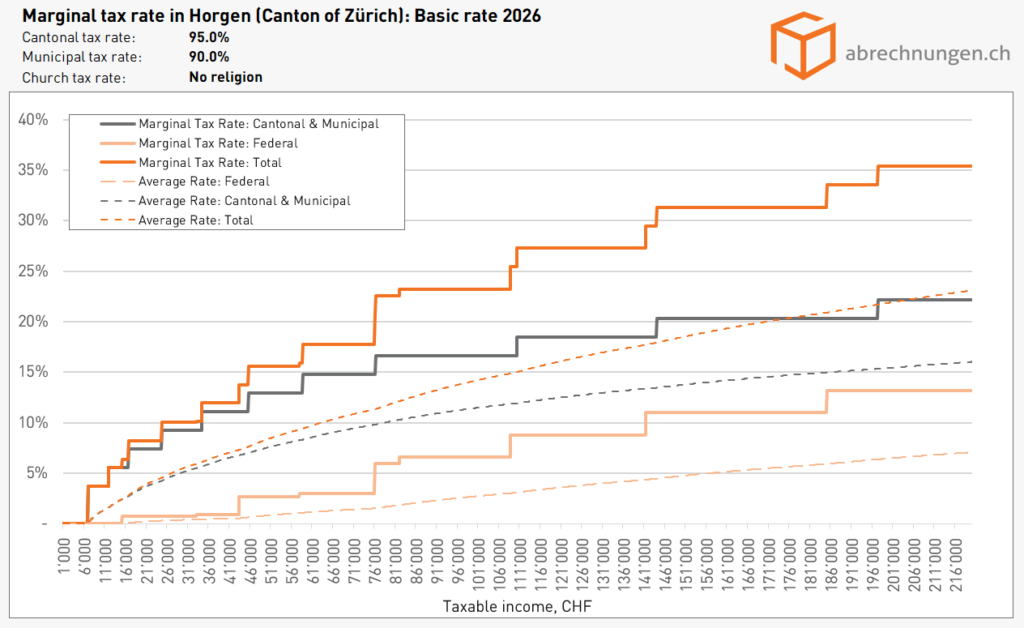
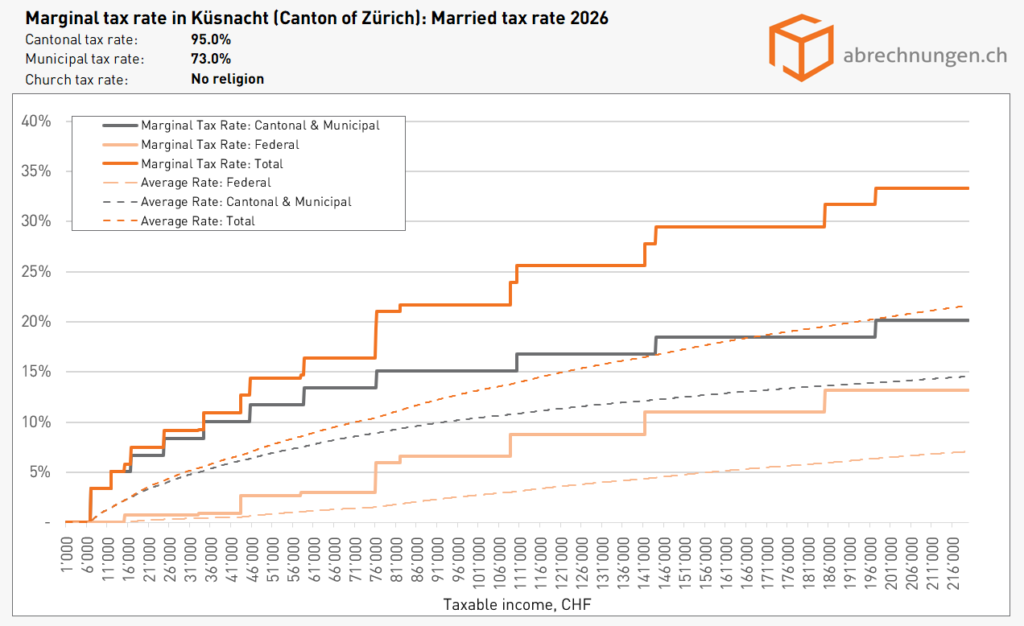
Do you have any comments regarding the charts or your tax municipality? Do you find the visualizations helpful, or is there any information you feel is missing? We kindly ask you to refrain from sending direct email inquiries about this article and instead use the comment function. All feedback will be read by us and, where possible, also responded to.
In a next step, our tax team will prepare similar charts for other cantons such as Aargau, Basel-Stadt, Zug, and Bern.
Find out the marginal tax rate in other cantons



mit praktischen Tipps
und Beispielen für Ihre
private Steuererklärung
Zum Gratis Download

2 Comments
CKent
June 3, 2026 @ 14:44
Dear all,
I really appreciate the effort you put into creating such nice charts. I’d be delighted to also see a table with the detailed data regarding marginal taxes.
Looking forward to seeing something like this one day.
Philipp Stirnemann
June 8, 2026 @ 10:10
Thank you for your honest feedback.
To be honest, we are actually considering publishing the aggregated underlying data as well. Maybe we’ll implement this idea sometime in the coming months.
Have a great day!
Leave Comment